The seven deadly sins list and what each one means
The seven deadly sins are pride, greed, lust, envy, gluttony, wrath and sloth. This guide explains what each means, gives an everyday example and shows where its four questions fit in the test.
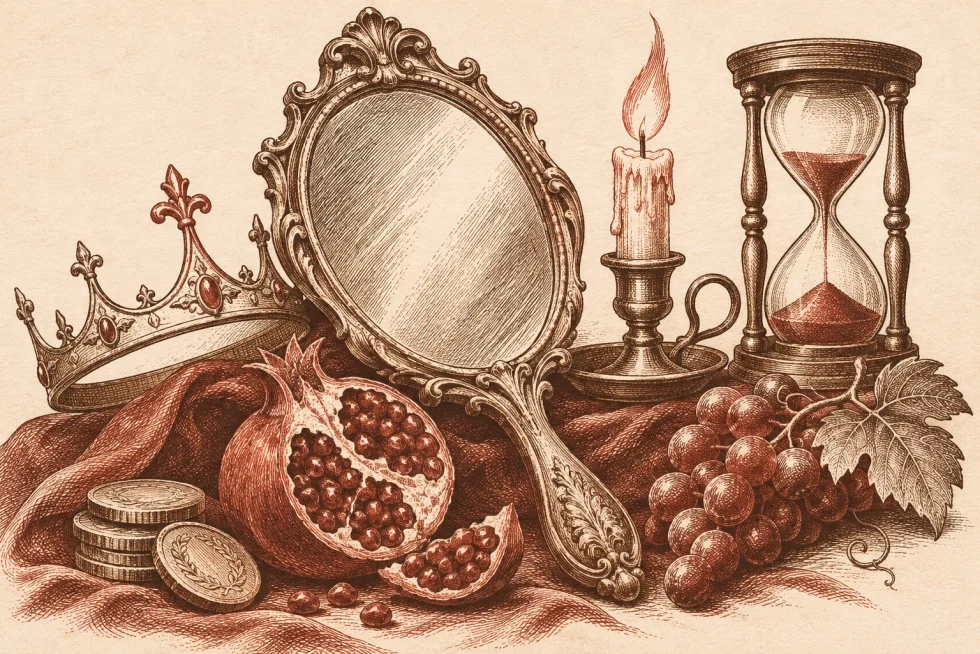
The seven deadly sins, with examples

Pride
Needing to be right or to get credit. You feel overlooked when feedback goes to a teammate.

Greed
Wanting to gain or hold on to more. You reach a goal and the next upgrade immediately takes its place.
Lust
Feeling pulled to act on attraction. The prospect of a reply starts to crowd out plans you made earlier.

Envy
Feeling the sting of comparison. A friend’s good news makes your own progress feel smaller.

Gluttony
Continuing to consume after satisfaction fades. You play another episode after you stop enjoying the show.

Wrath
Reacting sharply or staying angry after a conflict. You replay the conversation long after a repair.

Sloth
Putting off a task you want to do. You clear your inbox while the important application sits untouched.
Why the list is called the capital vices
Seven vices, one odd name. "Capital" comes from the Latin caput, a head: these are the sins that other faults grow out of, the way branches come off a trunk. The classic seven were set out by Gregory the Great in the sixth century, drawing on earlier monastic lists that had eight entries and included vainglory and acedia. Thomas Aquinas later summarised the same set, and the Catechism of the Catholic Church still names them. The order differs between sources; this page uses the common English order.
What the list describes is not a set of crimes. It is a set of ordinary patterns — wanting credit, wanting more, wanting the moment, comparing, continuing, retaliating, avoiding — that become a problem when they run the situation.
The seven, one by one
Pride — needing to be right or to be seen
Pride puts your standing ahead of the facts. It shows up when a correction lands like a verdict rather than like information, when an achievement feels smaller because nobody noticed it, or when you explain why your choice made sense before you admit it didn't. The tradition calls it the root because it quietly rearranges what you care about. Its counter-virtue is humility, which in practice means keeping your judgement while letting the correction in. On the quiz, the four Pride statements ask about where credit goes, explaining away a mistake, recognition and letting someone else lead. Read the Pride page.
Greed — acquiring and keeping past enough
Greed is the pull toward more after the goal is already met. The practical replacement becomes a premium model; the saved amount becomes a comparison with people who have more. It is not the same as wanting something you lack — that has a target. Greed shows up when the target moves as soon as it is reached. Its counter-virtue is generosity, best practised with a stated limit so it does not turn into another scoreboard. The four Greed statements cover chasing the next perk, keeping an unused item, wanting a better bargain and walking away when a deal serves no need. Read the Greed page.
Lust — desire that decides before you do
Lust is appetite taking over the moment: attraction that moves your plans, your attention or someone else's boundaries. Noticing that you are drawn to someone is automatic and not a moral question; acting on it before deciding what you want from it is the part this list is interested in. Its counter-virtue is self-control, which here means the pause rather than the refusal. The quiz approaches this through four non-explicit statements about diverted attention, acting before deciding, enjoying anticipation and letting attraction pass. Read the Lust page.
Envy — the sting of someone else's news
Envy starts with another person’s good fortune. A peer announces a win and, for a moment, the fact of their having it changes how you feel about your own day. It is close to jealousy but not the same: envy starts with what someone else has, jealousy with the fear of losing what you already value. Its counter-virtue is kindness, including the ordinary kind that can say "good for you" without keeping score. The four Envy statements ask what happens when peers succeed, praise goes elsewhere, you explain another person’s advantage or you can still share in their good news. Read the Envy page.
Gluttony — continuing after enough
Gluttony is consumption that has outlasted its own pleasure. Food and drink are familiar examples in the tradition. The quiz also applies the idea to an extra episode or scrolling after you stopped enjoying it. Its counter-virtue is temperance, better understood as timing than as denial: stopping while it still feels good, so the next time still appeals. The four Gluttony statements ask about taste fading, watching on while tired, going past a planned treat and stopping a leisure activity while it still feels good. Read the Gluttony page.
Wrath — anger that outlasts its usefulness
Wrath is anger that runs past the point where it could fix anything: the reply sent before you check the tone, the better comeback rehearsed at midnight. Anger itself is information that a boundary was crossed; the vice is the part that keeps going after the issue is closed. Its counter-virtue is patience, which is easiest to read as timing — the same sentence, an hour later. The four Wrath statements cover replaying a disagreement, replying before checking the tone, lingering after an interruption and cooling down when the issue is corrected. Read the Wrath page.
Sloth — avoiding the task that matters
Sloth is the quietest entry on the list: not a lack of effort, but avoidance of the task that counts while easier work fills the time. The older name, acedia, described a spiritual listlessness rather than plain laziness, and the pattern is usually specific — one document, one conversation, one awkward first step. Its counter-virtue is diligence, more useful as a size than a virtue: a first move small enough that starting it is not a decision. The quiz asks about delaying a small task, filling the time with easier jobs, leaving plans without deadlines untouched and starting before you feel fully ready. Read the Sloth page.
How to tell similar patterns apart
The pairs cause the most confusion, and the scores are meant to be read together:
- Pride, envy and greed all involve comparison, but they point at different things. Pride wants how others see you, envy wants what someone else has, greed wants the next thing you could acquire. If those scores differ, consider which situation your answers brought to mind first.
- Greed and gluttony both look like excess. Greed is about getting and keeping the extra thing; gluttony is about continuing to consume what is already in front of you. A purchase you never use points at greed; a packet finished without appetite points at gluttony.
- Wrath and sloth can both affect a difficult conversation. A sharp reply sent before you check the tone can escalate the disagreement. Putting off the first message can delay the conversation. When you compare the two scores, think about whether reacting quickly or postponing the first move was more familiar.
How this list became a quiz
The seven deadly sins test turns each of the seven into four statements about an ordinary month — getting feedback, handling an upgrade, waiting on a spark, reading a peer's news, stopping an episode, answering a cut-off, opening a document. One statement in each set runs the other way, so the combined score from 0 to 16 reflects how you answered those four statements. You can compare your own totals across categories. It takes about four minutes, and you see all seven scores side by side.
Common questions
Are the capital vices and the seven deadly sins the same list?
In the traditional Christian list discussed here, yes. The Catholic Catechism calls pride, avarice, envy, wrath, lust, gluttony and sloth or acedia capital sins because they can give rise to other faults.
Are there other names for greed and sloth?
Yes. Greed is also called avarice. Some traditional versions give sloth as sloth or acedia. The quiz uses the familiar English names and gives each a specific everyday meaning.